Nevile Strange and Audrey Strange
Towards ZeroNevile Strange and Audrey Strange are joined by a marriage that ended legally but remains emotionally unsettled. Audrey divorced Nevile so that he and Kay Strange could marry, yet later exchanges reveal a persistent divide: Audrey describes the past as over, while Nevile admits his wrongdoing and eventually asks to return to her. Their relationship is defined not simply by former love, but by the tension between Audrey’s effort to leave it behind and Nevile’s renewed claim on their shared history.
Marriage, Divorce, and Responsibility
The evidence establishes that Audrey’s divorce made Nevile’s marriage to Kay Strange possible. When the subject arises between Nevile and Kay, Kay characterizes Audrey as cool and colourless and complains that Lady Tressilian has not forgiven her for taking Audrey’s place. Nevile answers that Lady Tressilian had been devoted to Audrey and suggests that her generation might not readily accept divorce. His detached explanation falters, however, when Kay says that people believe he treated Audrey badly: Nevile quietly acknowledges that he did.
That admission makes the exchange more than a dispute about Lady Tressilian’s attitude. Kay treats the past as something that happened and must now be accepted; Nevile distinguishes Audrey’s conduct from Kay’s account of it. He says Audrey did not make a fuss and reminds Kay that Audrey divorced him so that Kay and he could marry. The contrast turns on what the divorce meant: for Kay, it is a completed change of place and circumstance; for Nevile, it is evidence of what Audrey accepted on his behalf. His recollection does not undo the hurt, but it shows that he does not share Kay’s dismissive description of Audrey.
The September Invitation
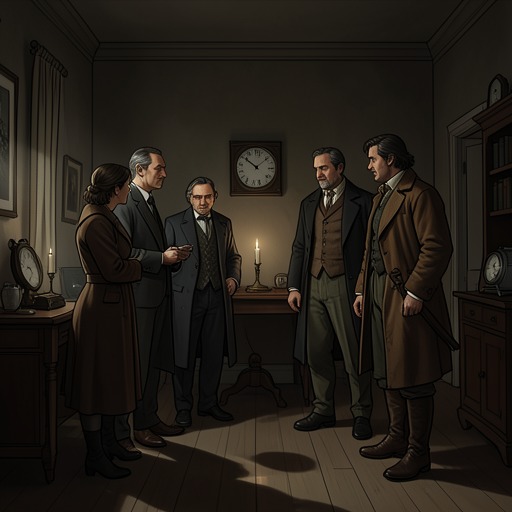
The relationship returns to view when Lady Tressilian tells Audrey about a letter from Nevile. He proposes that he and Kay come to Gull’s Point in September, explaining that he wants Audrey and Kay to be friends and saying that Audrey herself thinks the plan a good idea. Lady Tressilian finds the proposal preposterous and asks Audrey whether she truly wants it to happen. The plan therefore carries more weight than a social visit: it would bring the former spouses together in the presence of the woman who married Nevile after the divorce.
Audrey does not respond as Lady Tressilian expects. She asks whether the proposal is really so preposterous, but Lady Tressilian presses the personal risk, reminding her that she had been very fond of Nevile and warning that the meeting could reopen old wounds. Audrey looks down at her gloved hands; Lady Tressilian notices that one is clenched against the side of the bed. Audrey then raises her head and says that it is all quite over. The gesture and the measured assurance sit in tension: the scene gives physical form to the possibility of strain without contradicting Audrey’s stated decision to regard the past as finished.
Old Attachments and Competing Understandings
A later conversation asks Audrey to look back to the time before she married Nevile. Asked why she married him, she answers that she fell in love with him. The questioner then asks what had attracted her so strongly. The exchange places her former marriage within a remembered personal history rather than treating it merely as a legal arrangement that ended when she divorced him.
In the same conversation, Thomas Royde speaks of his own longstanding feelings for Audrey and of his resentment toward Nevile, whom he sees as possessing the accomplishments and success he lacks. He says that Nevile married the only girl he ever cared for and that he had cared for Audrey since she was fifteen. This perspective gives the Nevile–Audrey relationship a further consequence: the marriage is also part of the history through which another person has understood his unreturned attachment. Audrey stops Thomas when he says that he still cares for her, keeping that disclosure from becoming a simple romantic alternative to her former marriage.
Nevile’s Attempt to Resume the Marriage
Nevile’s later approach to Audrey changes the terms of their reunion. He asks whether they can return to where they were and forget what has happened. Audrey immediately includes Kay in the question, refusing to let the proposed restoration erase Nevile’s present marriage. He replies that Kay will be sensible and says he will tell her the truth, appeal to her generosity, and explain that Audrey is the only woman he ever loved. Audrey counters that he loved Kay when he married her. Nevile calls that marriage his biggest mistake, presenting his current declaration as a reversal of the choice that followed Audrey’s divorce.
Earlier, when he addresses Audrey as his wife, she turns away; Nevile runs down to the beach and joins Kay. The juxtaposition is significant: his language asserts an intimate bond, but Audrey does not answer by returning to it, and he goes back to the woman he has married. The later request to begin again therefore remains a plea, not evidence that the former marriage has been restored. It also sits uneasily beside Audrey’s calm insistence to Lady Tressilian that the past is over. Nevile’s words disclose his desire to reclaim the relationship; they do not establish Audrey’s consent.
The Relationship’s Unresolved Meaning
Across these encounters, the relationship is shaped by unequal interpretations of the same history. Audrey’s divorce enabled Nevile’s second marriage, and Nevile recognizes that she accepted the separation without the public fuss Kay attributes to her. Yet Audrey’s composure does not itself prove that the earlier attachment has returned, just as Nevile’s confession of love does not erase his past treatment of her. The narrative repeatedly sets his claims against her measured responses: she can acknowledge that she once loved him, while insisting that the old relationship is over; he can admit that he wronged her, while attempting to make his present desire the decisive truth.
The result is not a straightforward reconciliation but a conflict over who may define what their marriage meant and what its ending permits. For Nevile, Audrey’s earlier sacrifice and his renewed declaration become grounds for imagining a return. For Audrey, the proposal to reunite cannot simply make Kay disappear or reverse the intervening choices. Their bond persists in memory, admission, and appeal, but the evidence leaves the decisive question unresolved: whether Audrey will accept Nevile’s attempt to reclaim the place he once occupied in her life.